Pink Rose Bouquet Embroidery Design
First Impressions: Soft Romance, Not Overdone Sweetness
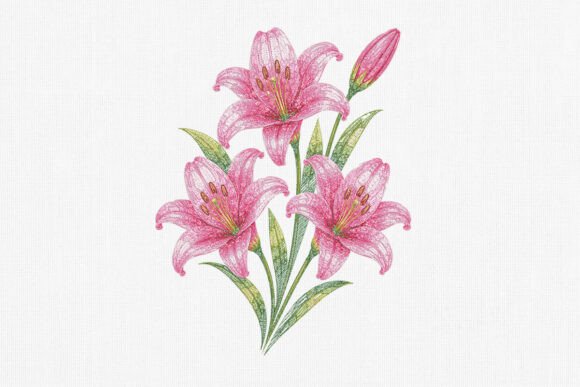
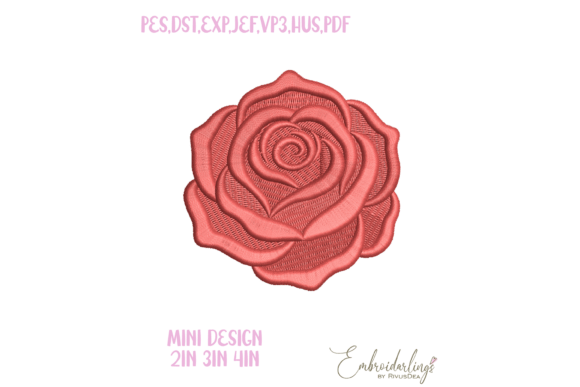
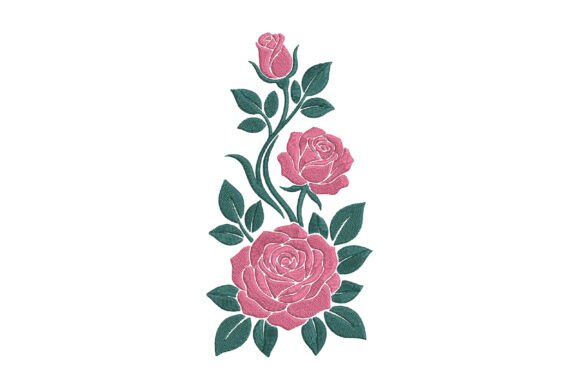
When I opened the Pink Rose Bouquet Embroidery Design, what struck me wasn’t just the color—but the breathing room. This isn’t a tight, fussy cluster of roses crammed into a circle. It’s a gentle, asymmetrical bouquet with open space between stems and petals, letting light (and fabric) show through. The soft pink tones suggest tenderness—not saccharine femininity—and the lush green leaves aren’t afterthoughts; they’re layered with subtle variation in stitch direction, giving depth without heaviness. As a designer who regularly selects embroidery files for boutique baby blankets and bridal shower totes, I immediately saw its quiet confidence: it reads as handmade, intentional, and emotionally resonant—not generic or clip-art-like.
A Real Project Test: Stitching It on a Linen Tea Towel
Last week, I used the Pink Rose Bouquet Embroidery Design on a natural linen tea towel—intended for a small shop’s spring collection. I chose a medium-weight cutaway stabilizer, matched thread colors to muted rose pinks and sage greens (no neon here), and hooped carefully to avoid distortion on the slightly textured surface. What emerged after stitching was exactly what the design promised: delicate, legible, and unhurried. The satin stitches on the outer petals held crisp edges, while the fill stitches in the center blooms stayed airy—not muddy or over-packed. Customers who later saw the finished product didn’t say “cute” or “pretty.” They said “calm,” “thoughtful,” and “like something my grandmother would’ve chosen.” That’s the difference between decoration and design—and this one lands firmly in the latter.
Where It Shines (and Where It Asks for Care)
The Pink Rose Bouquet Embroidery Design excels on stable, medium-weight fabrics where detail can breathe: cotton aprons, organic cotton baby onesies, structured tote bags, and pillow covers with tight weaves. On sweatshirts? Yes—but only with proper tear-away + cutaway combo stabilizer and reduced top tension to prevent puckering around the leaf veins. As a machine embroidery design, it leans into elegance over boldness, so it works beautifully for wedding guest towels, nursery wall hangings, or personalized graduation handkerchiefs.
That said, it’s not a “throw-it-on-anything” file. Avoid using it on highly stretchy knits without extensive digitizing adjustments—it lacks the short-stitch reinforcement needed for constant movement. Tiny hoop sizes (under 4x4 inches) will compress the composition and blur petal separation. And on dark fabric? Test contrast rigorously: pale pink thread disappears on charcoal unless you add a white underlay or switch to blush or dusty rose tones. Also, skip curved surfaces like cap fronts unless you’re willing to re-digitize stem angles—those long, graceful stems don’t wrap well.
What It Adds to Your Finished Product
This isn’t just about looks—it’s about perceived value. A customer buying a handmade product embroidered with the Pink Rose Bouquet Embroidery Design doesn’t just see flowers. They sense care in the spacing, intention in the color balance, and quiet sophistication in the line work. For Etsy sellers and craft fair vendors, that translates directly to higher price acceptance and repeat buyers. I’ve watched shoppers pause longer at items featuring this design—not because it shouts, but because it invites closer looking. That kind of engagement builds trust, especially for personalized gifts or boutique branding where consistency matters.
Designer Notes You’ll Actually Use
- Always test first—not just on scrap fabric, but on your *actual* project fabric with your *actual* stabilizer stack. Linen behaves differently than quilting cotton, which behaves differently than French terry.
- Review stitch density before sending to your machine. If the center bloom feels overly dense, consider reducing fill stitch density by 5–10%—it often improves drape and wash durability.
- Check small details in the bud tips and leaf serrations. If they vanish on your screen, they’ll vanish on fabric—especially at smaller scales.
- Mock it up in black and white before finalizing thread choices. You’ll spot contrast issues faster, and it helps visualize how the design reads at arm’s length.
- Confirm licensing before listing it as part of a commercial embroidery project or digital product. Some versions allow small-batch physical use but restrict resale of the embroidery file itself.
Beyond the Hoop: Why This Design Fits Real Creative Work
As someone who reviews hundreds of embroidery files a year, I notice how few truly support both personal joy *and* professional viability. The Pink Rose Bouquet Embroidery Design does both—not because it’s flashy, but because it’s balanced. Its scale fits standard hoop sizes without cropping, its flow adapts to vertical or horizontal placement (great for tote bag handles or pillow hems), and its theme bridges seasons: romantic enough for weddings, soft enough for baby showers, timeless enough for holiday hostess gifts. For craft business owners building cohesive collections, it pairs naturally with neutral typography or minimalist monograms—not competing, but complementing.
It also holds up in digital spaces. Whether you’re creating printable mockups for your Etsy listings or showing clients a preview of a custom apron, the design renders cleanly at 150 dpi and retains character even when scaled down for thumbnails. That’s rare in floral embroidery files, where complexity often collapses into visual noise.
Final Thought: A Design That Lets the Maker Shine
At its core, the Pink Rose Bouquet Embroidery Design doesn’t try to be everything. It’s focused. It’s refined. And it gives space—not just in its layout, but in how it lets your craftsmanship take center stage. Whether you’re stitching a single gift or producing 50 embroidered patches for a small shop launch, this design supports your voice instead of drowning it out. That’s the mark of a truly usable, human-centered embroidery file—one that earns its place in your design assets, your workflow, and your customers’ hands.