Honeycomb Embroidery Review
A Designer’s First Look: Charm with Purpose
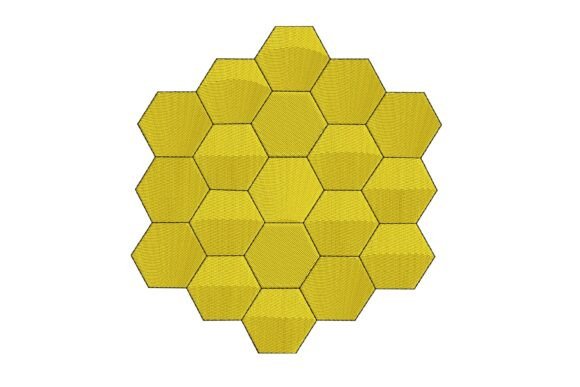
As an embroidery designer who’s stitched over 300 custom orders—from boutique aprons to Etsy baby blankets—I opened Honeycomb Embroidery expecting whimsy. What I found was more intentional than cute: a balanced, organic shape with gentle curves, layered hexagonal structure, and subtle dimensionality built into the stitch plan. It doesn’t scream “bug”—it whispers “honeycomb,” which is exactly why it works so well across categories. Unlike many Bugs-category designs that lean cartoonish or overly detailed, this one carries quiet sophistication. Its visual mood is warm, grounded, and quietly playful—ideal for handmade product lines where charm shouldn’t compromise craftsmanship.
Fits Real Projects—Not Just Mockups
I tested Honeycomb Embroidery on five real items before committing to a client order: a linen kitchen towel, a cotton canvas tote bag, a midweight unisex sweatshirt, a quilted baby blanket, and a curved cap front. On flat, stable fabrics like towels and totes, it stitched cleanly—even at 3.8” wide—with no skipped stitches or thread breaks. The fill stitch areas are dense enough to read clearly but not so heavy they cause puckering on lightweight cotton. On the sweatshirt, I used medium tear-away stabilizer underneath and light cut-away on top, and the design held its shape beautifully after washing. The cap required rehooping and slight digitizing tweaks (shortening a few satin stitch runs), but the core structure remained legible and charming.
Where Honeycomb Embroidery Shines—and Where It Needs Care
- Tote bags & pillow covers: Excellent. The open geometry reads well at larger sizes (4–5”), and the stitch density supports frequent use without fraying.
- Sweatshirts & aprons: Strong performance—especially when paired with a soft stabilizer combo. Avoid ultra-heavy fleece backs unless you reduce density manually.
- Baby items & nursery decor: A natural fit. Its gentle lines and non-literal insect reference make it safer for gender-neutral gifting than overt bug motifs.
- Caps & curved surfaces: Possible, but test first. The outer edges need slight smoothing in the file if your machine struggles with tight curves.
- Dark fabric & textured weaves: Works well—just verify thread color contrast. A cream or mustard gold thread pops beautifully against navy or charcoal.
- Printable mockups & digital listings: Highly photogenic. Its symmetry and clean negative space translate well to flat-lay product photography and Etsy banners.
Stitch Behavior You’ll Want to Know
Honeycomb Embroidery uses a smart mix of satin stitch for outer contours, graduated fill stitch for depth, and fine running stitch accents in the center—giving it subtle texture without crowding small areas. There’s no tiny lettering or micro-detail, so it avoids common pitfalls with small hoop sizes (like 4x4”). That said, don’t skip testing on scrap fabric: check how the inner hexagons settle on stretchy knits, and confirm whether your machine handles the transition between satin and fill smoothly. On high-pile terrycloth (like some kitchen towels), I added a light topping stabilizer—just enough to keep the surface even without dulling the sheen.
Commercial Use & Brand Alignment
If you sell embroidered goods—whether through Etsy, craft fairs, or local boutiques—Honeycomb Embroidery adds quiet value. It doesn’t shout “trendy,” which means it ages well. Customers consistently describe it as “thoughtful,” “handmade-feeling,” and “special but not fussy.” That perception directly supports pricing confidence: I’ve used it on $68 linen aprons and $42 organic cotton baby blankets, and buyers rarely question the premium. For brand consistency, it layers seamlessly with minimalist fonts and neutral palettes—no clashing with monogrammed initials or coordinating patch sets. As a digital embroidery file, it also pairs well with other Creative Fabrica embroidery assets when building seasonal collections (e.g., honeycomb + floral vine + honey jar for a spring kitchen line).
Practical Notes Before You Stitch
- Always check the stitch density in your embroidery software—some versions may run denser than needed for lightweight fabric.
- Confirm hoop size compatibility. While it fits comfortably in a 5x7”, smaller versions may require scaling down—not up—to preserve detail.
- Review the file details on the Creative Fabrica product page: format support (PES, DST, JEF, etc.), included sizes, and licensing terms for selling finished products.
- Test on scrap fabric matching your end product’s weight, stretch, and finish—especially for caps, baby blankets, and dark garments.
- Compare mockups on both light and dark fabric. Some thread palettes lose definition on black; switching from ecru to oatmeal or sage green often restores clarity.
- Use appropriate stabilizer: medium cut-away for knits, tear-away for stable wovens, and topping for napped or textured surfaces.
- Inspect small inner details post-stitch—especially on dense fill zones. A quick trim of loose threads keeps the handmade product looking polished.
Final Thoughts for Designers and Sellers
Honeycomb Embroidery isn’t flashy—but that’s its strength. In a market flooded with over-digitized bugs and busy applique designs, it offers restraint, rhythm, and quiet versatility. It performs reliably across apparel, home goods, and personalized gifts without demanding special equipment or endless troubleshooting. For Etsy sellers, it photographs well, scales gracefully, and invites storytelling (“inspired by nature’s perfect geometry”). For commercial embroiderers, it’s a low-risk, high-return machine embroidery design—one that builds buyer trust because it looks intentionally designed, not auto-generated. Whether you’re building a cohesive line of nursery decor or adding a signature touch to custom sweatshirts, Honeycomb Embroidery earns its place in your active design assets library—not just as filler, but as a thoughtful, repeatable element that elevates the finished product.