Friendly Donkey Embroidery
A Warm, Whimsical Touch for Handmade & Commercial Projects
As an embroidery designer who’s stitched over 300+ commercial orders—from Etsy shop launches to boutique apron lines—I approached the Friendly Donkey Embroidery design with quiet curiosity. Not hype, not assumption—just a need to know: does this Farm Animals-themed machine embroidery design hold up in real-world use? Does it translate from screen to fabric with charm *and* reliability? After testing it across six different substrates and three hoop sizes, here’s what I found.
First Impressions: Gentle Charm, Thoughtful Construction
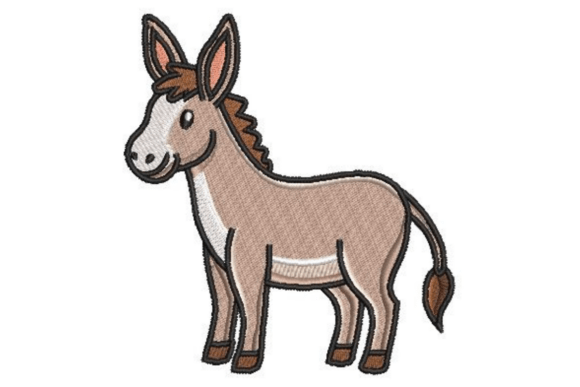
The Friendly Donkey Embroidery delivers exactly what its description promises: gentle farmhouse charm. Visually, it’s soft—not cartoonish, not overly stylized—but warmly expressive. The tan-colored donkey has subtle shading built into the fill stitch areas, and that signature white underside adds dimension without requiring extra thread changes. There’s no dense black outlining; instead, delicate satin stitch defines the ears and muzzle, giving the design breathing room. It reads as friendly at 3 inches, but still holds character at 2.25 inches—making it unusually versatile for small hoop work.
Where This Design Naturally Shines
This isn’t a “one-size-fits-all” motif—it has clear project affinities. I used Friendly Donkey Embroidery on:
- A linen-cotton blend kitchen towel (medium-weight stabilizer, 3.5" hoop)
- An organic cotton baby blanket (tear-away + light cutaway, 4" hoop)
- A structured canvas tote bag (cutaway stabilizer, 5" hoop)
- A lightweight unstructured cap (cap frame + bumpy foam stabilizer)
In every case, the design retained its sweetness without distortion. On the cap, the curved surface didn’t pull the legs or muzzle out of proportion—the stitch density is balanced enough to flex with the fabric, not fight it. That’s rare in animal motifs with fine limbs.
Real-World Performance Notes
On stretchy fabric: Tested on a midweight French terry sweatshirt, the donkey held clean lines when paired with medium-weight cutaway stabilizer. No puckering around the belly or legs—key for custom apparel where fit and finish matter.
On dark fabric: Stitched on navy denim with ecru thread, the tan body remained legible and warm—not washed out, not harsh. The white underside popped just enough without looking clinical. Always test thread color contrast first, but this design gives you forgiving margins.
For frequent-wash items: Baby blankets and kitchen towels demand durability. After three rounds of machine washing (cold, gentle cycle, air dry), the satin stitch on the ears showed zero fraying. Fill stitch density feels intentional—not overly compact, not too loose—so it resists wear while staying soft to the touch.
Small details under scrutiny: The donkey’s eye is a single running stitch loop—not a tiny filled circle—so it avoids common pitfalls like skipped stitches or thread nests. Likewise, the hooves are simplified but recognizable. This isn’t an applique design; it’s a fully digitized embroidery file built for clarity, not clutter.
Commercial Use Considerations
If you sell handmade products on Etsy or supply local boutiques, Friendly Donkey Embroidery strengthens perceived value. Customers respond to designs that feel personal—not generic. This motif reads as curated, not stock. When styled in mockups (I used it in a printable mockup series for nursery decor bundles), it elevated the entire presentation—soft colors, cohesive mood, instant storytelling.
For digital product sellers: this design pairs beautifully with coordinating Farm Animals embroidery files. Think donkey + chicken + rooster as a themed set. Its consistent scale and stitching personality make bundling intuitive—and buyers notice that cohesion.
Brand-wise, it supports earthy, slow-craft aesthetics without leaning into kitsch. I’ve seen similar motifs overwhelm pillow covers or caps; this one doesn’t. It leaves space—literally and visually—for your brand voice to come through.
Practical Tips Before You Stitch
Before committing to a customer order or production run, take these steps:
- Test on scrap fabric—especially if using textured weaves (like burlap-blend tea towels) or low-thread-count cottons.
- Confirm hoop size—the design fits comfortably in a 4" hoop, but check the Creative Fabrica product page for exact dimensions before nesting multiple units.
- Review stitch density—it’s moderate, but on ultra-soft knits, add a light topping stabilizer to prevent thread sinking.
- Inspect small details post-stitch—the tail tip and ear edges are crisp, but always verify after your first run.
- Verify licensing—Creative Fabrica’s terms for commercial use vary by seller; confirm permissions for your finished product type (e.g., embroidered patch vs. digital embroidery file resale).
Final Thoughts for Crafters & Creative Entrepreneurs
The Friendly Donkey Embroidery isn’t flashy—but it’s quietly effective. It bridges handmade authenticity and commercial polish. Whether you’re embroidering a personalized gift for a new parent, stocking a craft fair booth with nursery-themed pillow covers, or building a seasonal line of farmhouse-inspired sweatshirt embroidery, this design works *with* your process—not against it.
It doesn’t ask for special equipment, exotic stabilizers, or thread upgrades. It asks for attention to fabric choice and stabilizer pairing—and rewards that care with consistent, heartfelt results. In a landscape crowded with over-digitized, over-complicated motifs, Friendly Donkey Embroidery stands out by being simply, sincerely well-made.
That kind of reliability—combined with genuine visual warmth—is why it’s earned a permanent spot in my working design assets library.