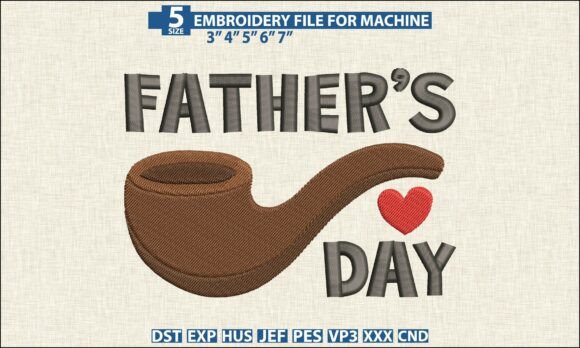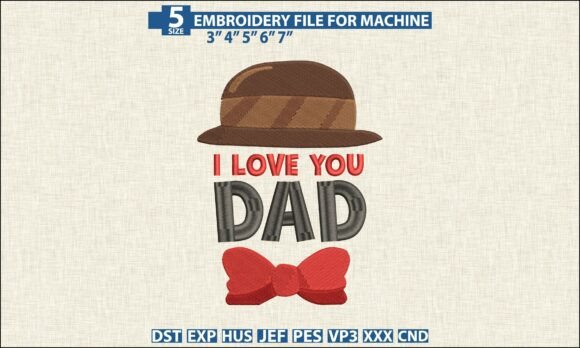
Father's Day Embroidery
First Impression: Warm, Timeless, and Booth-Ready
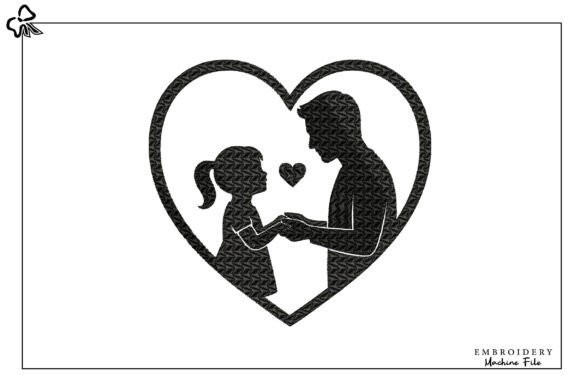
As an embroidery designer who’s prepped over 200 craft fair booths—from Portland pop-ups to Nashville maker markets—I’ll say this upfront: Father's Day Embroidery lands with quiet confidence. It’s not loud or gimmicky. It’s not cartoonish or overly cutesy. Instead, it reads as warm, heartfelt, and intentionally minimal—a silhouette of father and daughter nested inside a heart. That simplicity is its superpower at a crowded fair where buyers scroll past in under three seconds. No slogans, no puns, no clutter—just connection. It leans into farmhouse elegance and modern sentimentality, making it equally at home on a linen tea towel or a structured canvas tote.
Where This Design Shines On Craft Fair Products
Tote bags: A standout. The heart-and-silhouette composition scales beautifully from 4” to 7” wide. At 5”, it reads clearly from six feet away—critical when your booth has 12 other vendors selling similar bags. It avoids looking “juvenile” (a common pitfall for dad-themed designs) and instead feels like a curated, giftable handmade product.
Aprons and tea towels: Excellent placement options—centered below the pocket on aprons, or subtly corner-embroidered on flour-sack towels. The clean lines hold up against fabric texture, especially on medium-weight cotton or linen blends. Avoid dense terry cloth unless you double-stabilize—this design relies on crisp edge definition.
Embroidered patches: Highly effective. As a sew-on or iron-on patch, Father's Day Embroidery becomes versatile inventory: customers add it to denim jackets, backpacks, or kids’ lunchboxes. Its silhouette format translates well to 3”–4” patch sizes without losing legibility.
Pillow covers and small pouches: Ideal focal point. On a 16” x 16” cover, centering the design at 4.5” creates balance and perceived value. For 8” x 5” fabric pouches, use it as a subtle front accent—not too dominant, just enough to spark conversation.
Caps and curved surfaces: Proceed with caution. The heart outline and interlocking figures require precise digitizing for stretch and curve compensation. If your embroidery file wasn’t optimized for headwear, skip caps—or test rigorously on scrap baseball mesh first.
What Makes It Sell—And What Makes It Stumble
This machine embroidery design sells because it’s emotionally resonant but visually restrained. Buyers don’t need to “get it”—they feel it instantly. At craft fairs, that emotional shorthand converts faster than clever wordplay. It photographs exceptionally well for Etsy listings: soft natural light highlights the stitch texture without glare, and the contrast between figure and heart reads cleanly even in thumbnail size.
But here’s the real talk: Father's Day Embroidery does not forgive poor execution. Tiny gaps between the figures and heart outline can vanish on dark fabric or thick stabilizer. If your stitch density is too high, the heart may pucker on lightweight cotton. And if the original digital embroidery file includes fine interior linework (e.g., hair detail or clothing texture), those elements will blur on tea towels or low-thread-count fabrics.
Production Notes Every Embroiderer Should Check
- Test on scrap fabric first—especially if using textured towels, twill caps, or dark denim. Thread contrast matters more than you think; ecru thread on navy reads softer than black on white.
- Review spacing and clearance: Are the figures touching the heart edge? Tight nesting increases risk of skipped stitches or thread breaks during batch production.
- Confirm hoop size compatibility: Can it fit comfortably in a 4” x 4” hoop for quick turnaround on small items like patches and pouches? Or does it push into 5” x 7”, slowing your craft fair prep?
- Stabilizer strategy: Use cutaway for knits and lightweight wovens; tear-away works for stable cottons—but always pair with a light topping for towels to prevent thread sinking.
- Create one real mockup before ordering supplies: Stitch it on your exact tote fabric, photograph it in daylight, and hold it beside your other bestsellers. Does it hold visual weight? Does it look handmade—not mass-produced?
- Compare fabric colors: The same thread colors behave differently on oatmeal vs. charcoal linen. Swatch before stitching 50 units.
- Verify commercial licensing: If you’re selling finished products—not just the embroidery file—confirm the license permits resale of physical goods. Many digital sellers restrict commercial embroidery without add-on fees.
Booth Impact & Buyer Engagement
In my experience, Father's Day Embroidery performs strongest when grouped intentionally—not scattered across categories. Try a dedicated “Dad & Me” display: a folded tea towel beside a matching embroidered pouch and a mini pillow cover. Add a handwritten tag: “For the quiet heroes.” That cohesion tells a story—and stories sell at craft fairs far more than isolated items do.
It also elevates perceived value. A plain canvas tote with this design reads as a small shop product, not a generic promo item. Customers see intention, care, and emotional intelligence in the curation—traits they associate with premium handmade quality.
Just remember: this isn’t a design that shouts. It invites. It lingers. And in a sea of glitter, grommets, and neon, that gentle invitation often wins the sale.